The Community Problem You Don’t Know You Have
In 2026, most creators still treat community as a byproduct of content - a comment section or a Discord server bolted onto an existing funnel. That approach leaks value at every touchpoint: engagement drops, ownership is fractional, and when the algorithm shifts, the community evaporates. The durable alternative is community-led growth: a system where your most active members don’t just consume - they co-produce, moderate, and recruit. This turns followers into owners, and that ownership compounds into a self-sustaining asset.
Stop building on rented land. Start building systems where your community builds with you.
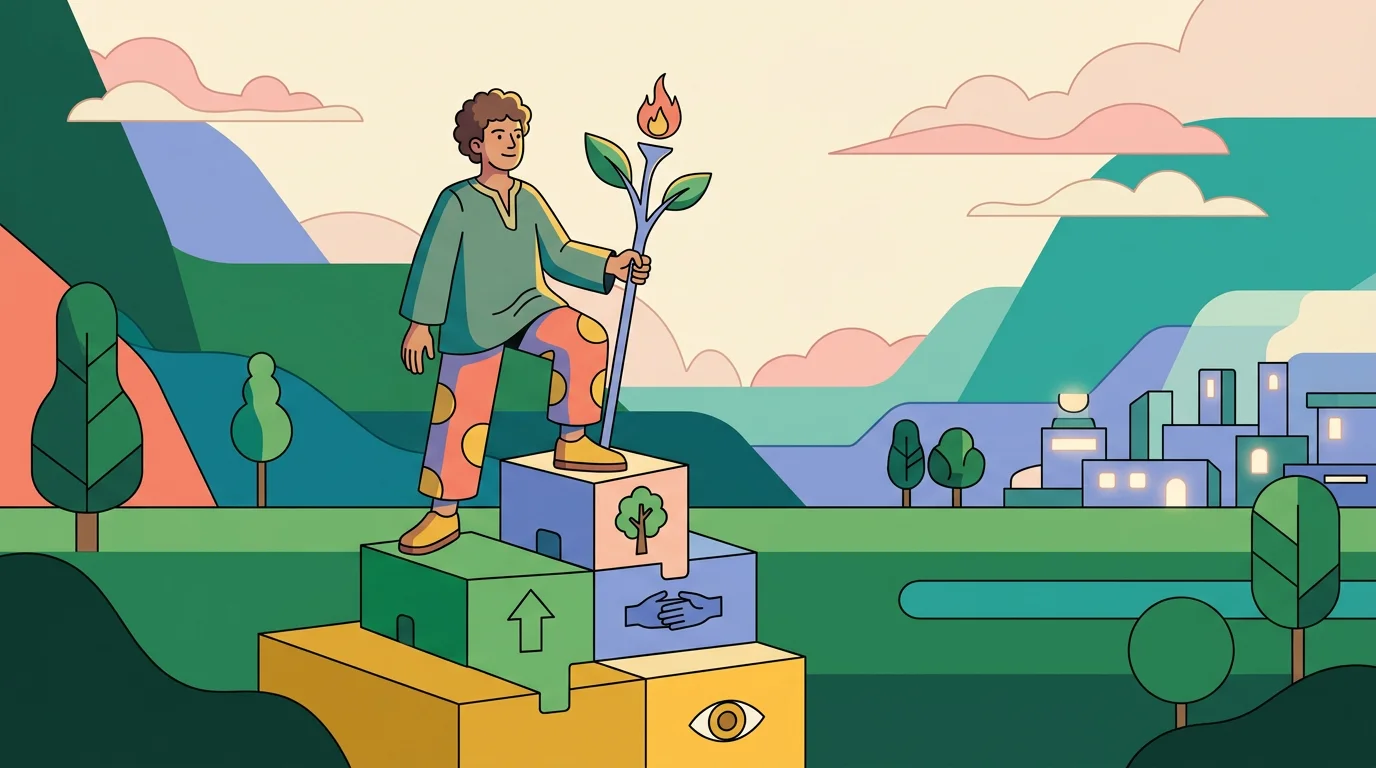
The 4-Layer Community-Led Growth Stack
This isn’t a strategy. It’s a stack - a sequence of systems that feed each other. Each layer is a forcing function for ownership.
Layer 1: Identity Layer - Own the Gate
Problem: Usernames and handles are scattered. Your audience doesn’t know where to find you - or worse, someone else owns the canonical identity.
Action: In 2026, every creator needs a single canonical identity - a domain (e.g., yourname.com) that redirects to your hub. Use a service like Cloudflare or Namecheap to enforce HTTPS and short links. Publish a /whoami page with your full identity stack: handles, pronouns, trust signals (credentials, past work). This becomes the North Star for your community.
Why it works: It eliminates confusion. Every new follower has a canonical entry point. Every tool you build later (newsletter, courses, community) inherits this identity.
Layer 2: Contribution Layer - Turn Followers into Contributors
Problem: 97% of community members are lurkers. They read, maybe comment, but rarely create. Action: Build a contribution ladder - a 4-step path from passive reader to active co-creator. Example:
Step 1 (Reader): Gets newsletter, reads posts.
Step 2 (Participant): Comments weekly, joins AMAs.
Step 3 (Contributor): Shares your work, writes short case studies, translates posts.
Step 4 (Owner): Runs local meetups, curates newsletters, mentors newcomers. System: Use a lightweight CRM (e.g., HubSpot free tier) or a community tool like Circle.so or Mighty Networks to tag members by level. Trigger emails or DMs when they hit thresholds (e.g., 10 comments → invite to contributor role). Why it works: Contributors feel ownership. Owners become your recruiting arm. The ladder reduces moderation load - owners self-police.
Layer 3: Ownership Layer - Issue Credible Tokens
Problem: Gratitude isn’t enough. People need tangible stakes in your growth. Action: In 2026, issue community credits - non-transferable tokens (soulbound tokens or simple points) tied to contributions. Use a lightweight tool like Collab.Land or Tokenproof to airdrop credits for actions: writing, translating, hosting events. Display a public leaderboard on your site. Credits unlock perks: early access, guest posts, revenue shares. System: Set a 90-day rolling window. Reset credits quarterly to prevent hoarding. Publish a transparent ledger. Credits are not financial - they’re reputation tokens that signal influence. Why it works: Credits turn abstract engagement into a visible asset. They prime members for future revenue splits, co-creation, or even legal entity formation (e.g., a community-owned LLC).
Layer 4: Revenue Layer - Convert Owners into Stakeholders
Problem: Most creators monetize after the fact - Patreon, YouTube ads - which fragments ownership. Action: Build a community revenue pool in 2026: a shared fund where top contributors opt into a revenue share from sponsorships, affiliate links, or subscription tiers. Use a simple agreement (e.g., Pledge or Open Collective) to pool funds transparently. Distribute monthly based on contribution credits and activity. Why it works: Stakeholders don’t just fund you - they defend you. They recruit, moderate, and co-create. The pool can scale into a community-owned asset (e.g., a podcast network, a newsletter syndicate, a tool suite).
The Operator’s 90-Day Blueprint
Use this checklist. No fluff. No fake timelines.
Week 1-2: Identity Lock
Buy your domain (avoid .me, .io - use .com or .co).
Set up a
/whoamipage with your full identity stack (handles, pronouns, past work, manifesto).Add a single redirect rule:
you.com → yourdomain.com/hub
Week 3-4: Contribution Ladder
Map your 4-step ladder (Reader → Participant → Contributor → Owner).
Pick one tool: Circle.so (for forums), Collab.Land (for tokens), or Google Forms + Notion (manual tracking).
Publish a
/contributepage with the ladder and a sign-up form.
Week 5-8: Token System
Choose a lightweight token system: Collab.Land (for Discord), Tokenproof (for web), or even a Google Sheet ledger.
Define 5 actions that earn credits (e.g., weekly comment, share post, translate post).
Publish a public leaderboard on your site. Use a free tier of a tool or a simple embed.
Week 9-12: Revenue Pool
Open a shared fund: Open Collective (free) or Pledge ($2/mo).
Announce a 90-day pilot: top 20 contributors split 30% of net revenue from newsletter sponsorships and affiliate links.
Publish a transparent monthly report: funds in, contributors out, distribution logic.
The Durability Test: What Happens When the Algorithm Dies?
In 2026, platforms still change the rules. But a community that owns its identity, contributes meaningfully, holds tokens, and shares revenue is not just resilient - it’s expansionary.
Identity layer gives you a home base.
Contribution layer reduces churn.
Ownership layer turns members into marketers.
Revenue layer turns stakeholders into defenders.
This is not a community. It’s a cooperative. And in 2026, that’s the only durable asset a creator can own.
One Next Action
Pick one layer this week. Lock your domain. Publish your /whoami. Then move to the next layer next week. Avoid the trap of building everything at once.
Your community isn’t a follower list. It’s a stack. Start stacking.